

Pet E-commerce / Shopify SEO Case Study
Pet E-commerce SEO:Building Search Visibility from Day One
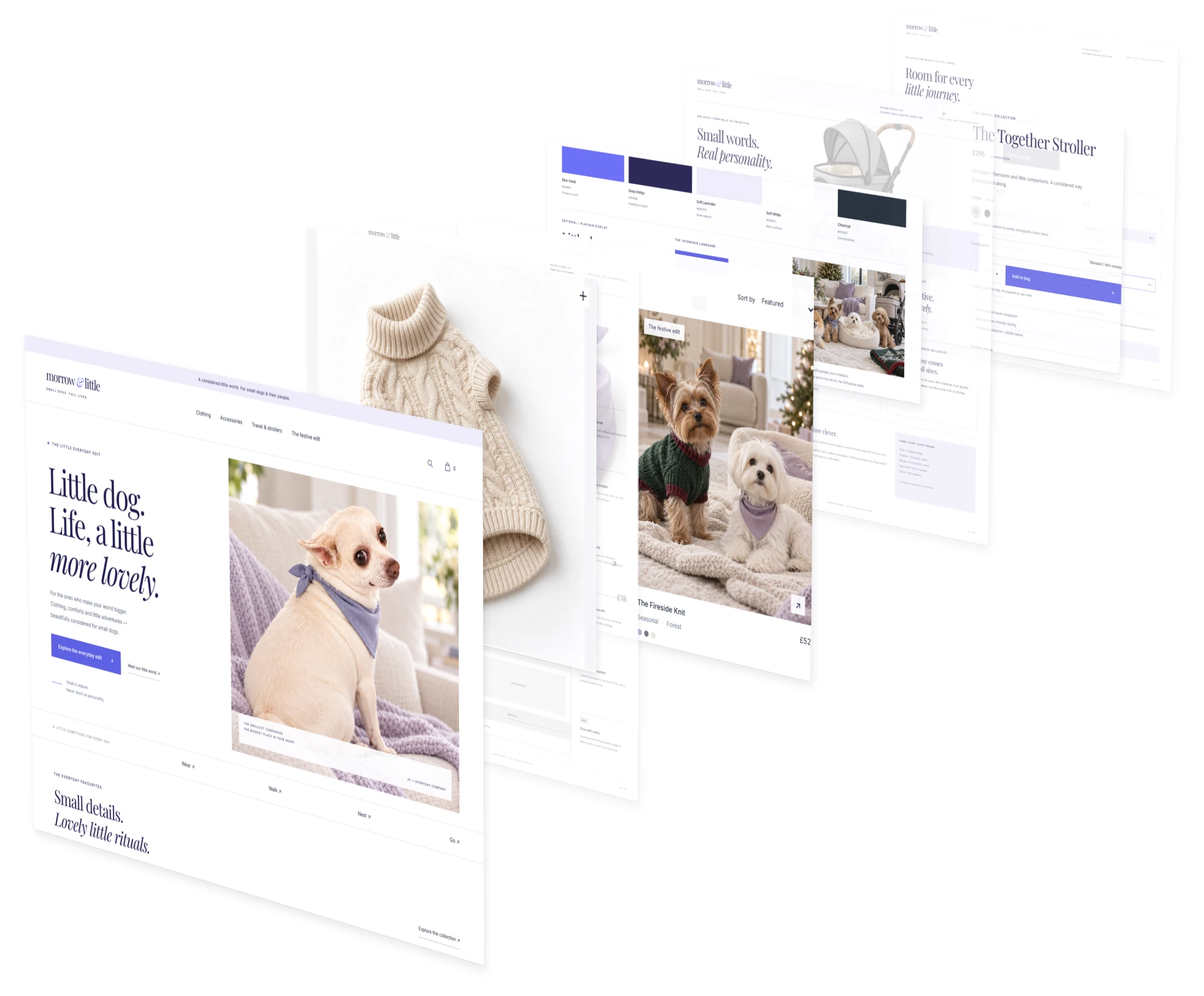
A Shopify store for small dogs, built from nothing, with search demand shaping the collections, the product pages and the shopping experience from the first wireframe. The project is ongoing and still in its early months.
- Industry
- Pet E-commerce
- Platform
- Shopify
- My role
- Website Design & SEO
- Focus
- E-commerce SEO, Technical SEO, Brand Visibility, AI Search
- Status
- Ongoing Project
About the Project
Clothing, accessories and travel gear for small dogs. No domain history, no reviews and nobody searching for the name.
The shop sells jumpers, fleece jackets, bandanas, blankets and strollers for small breeds such as Chihuahuas and Yorkshire Terriers. Its customers are owners who have learnt that standard sizes rarely fit, and who care how things look as much as how they work.
I designed the Shopify store and I'm responsible for its SEO. That made the commercial problem mine from the start: a new brand has nothing to rank on except the relevance and quality of what it publishes.
Building SEO into the Website
I didn't build the shop and optimise it afterwards. The search research came before the navigation, and it decided most of it.
People search for“small dog jumper”“chihuahua coat”
CollectionClothing
- The Contrast Fleece Jacket
- The Fireside Knit
Supporting contentHow to measure a small dog
People search for“dog bandana”“small dog accessories”
CollectionAccessories
- Bandanas
- Blankets
Only where a real question needs answering
People search for“small dog stroller”“pet pram”
CollectionTravel & strollers
- The Together Stroller
Only where a real question needs answering
People search for“christmas jumper for small dogs”
CollectionThe winter editSeasonal
- The Fireside Knit
Only where a real question needs answering
How search demand maps onto the store. Collection and product names are the store's own; the searches are examples of the demand each collection is built to answer.
How small-dog owners search
Owners rarely type “dog clothes”. They search by size and breed (a coat for a Chihuahua, a jumper for a small dog), by material and by season, and clothing demand moves with the weather in a way strollers don't. That told me which dimensions the catalogue had to express, and which belonged in filters rather than in pages of their own.
One home for each intention
Broad commercial searches became collections. Specific ones, a particular style or colourway, belong on product pages. Questions such as how to measure a small dog go into supporting content that points to the right products. I deliberately avoided a collection for every variation: a page per colour of “small dog jumper” would split the signals and give Google nothing new. Size and colour stayed as filters.
Product pages that answer the purchase question
Supplier copy describes the garment. Owners want to know whether it will fit, whether it suits their dog and what it looks like on one. So I write the descriptions around those questions, show products on real small dogs and link every garment to the size guide.
Shopify foundations, checked rather than assumed
Shopify gets a lot right by default, but not everything. I made sure product URLs reached through collections canonicalise to one address, that product structured data carries price, availability and brand, that images are sized for the layout and that the whole journey, from collection to bag, works properly on a phone.
Getting a New Brand Discovered
Without paid advertising, discovery rests on three things that feed each other: the searches people already make, the trust an unfamiliar shop has to earn and the way AI tools describe it.
Non-branded search comes first
Nobody searches for a brand they've never heard of. For the first months, every organic visit has to come from searches for the product or the problem: a coat that fits a Chihuahua, a stroller for a dog that tires on long walks. I prioritised searches that lead straight to something the shop sells, rather than publishing generic pet-care articles that might attract traffic but would never sell a jumper.
- fleece jacket for chihuahua
- small dog stroller
- xs dog jumper
Making an unfamiliar shop credible
Being found is only half of it. Someone who has never heard of the shop decides quickly whether to trust it. That depends on consistent brand details wherever it appears, a clear point of view on who it's for, About, delivery and returns pages that answer real questions, original photography of products on actual small dogs and, over time, mentions from people other than the brand itself. A logo does none of that on its own.
AI-assisted product discovery
More shoppers now ask ChatGPT, Perplexity or Google's AI features what to buy. I can't make the shop appear in those answers. What I can do is make it easy to describe accurately: specific product facts such as sizes, materials and measurements, structured data that matches the page, comparisons where buyers genuinely compare, and brand information that's consistent across the web.
Measuring it honestly means asking the same questions repeatedly over time. AI answers change from one day to the next, so a single screenshot proves very little.
“Warm jumper for a 3 kg Chihuahua that's easy to put on”
The First Two Months
The store has been live for about two months. That's long enough to see early signals and far too short to call anything a result.
- Paid advertising
- £0
I'm not publishing figures yet. Two months of data on a new domain says more about Google discovering the site than about how well it sells, and I'd rather show numbers once they mean something.
What I'm watching: organic clicks and impressions in Search Console, which collections and products Google shows first, and whether searches that don't include the brand name start bringing visits.
No paid advertising doesn't mean every sale came from Google, so I count an order as organic only when Shopify's attribution shows it.
What's Next
The next priorities will come from the data rather than a fixed plan: which emerging searches deserve their own collection or guide, which products attract attention without converting, how collections perform as the season turns, whether people start searching for the brand by name and how AI answers describe the shop over repeated checks.
The project is still evolving, and this case study will change with it.