

B2B Manufacturing / SEO Case Study
CNC Manufacturing SEO:Recovering Search Performance After Multiple Website Migrations
Three platform migrations had left a manufacturer's website with more than 6,000 URLs, over 2,000 broken URLs and hundreds of pages Google wasn't indexing. Here's how I approached the recovery.
- Customer enquiries
- +197%
- Organic traffic
- 3×
- Industry
- B2B Manufacturing
- Role
- Website & SEO Lead
- Services
- Full-Stack SEO Consulting
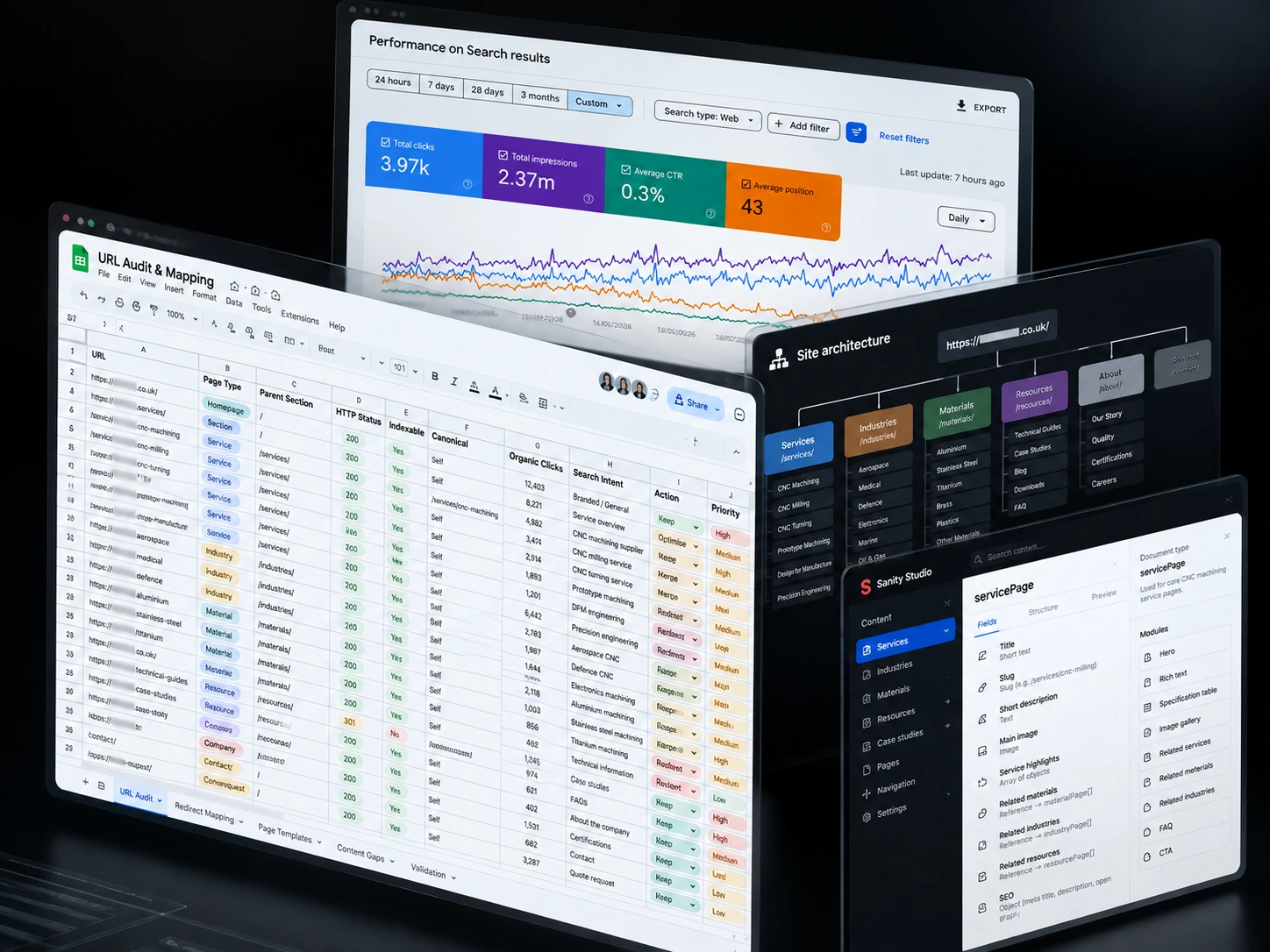
About the Project
An international B2B manufacturer offering custom manufacturing services, including CNC machining and injection moulding.
Its customers are engineers and buyers looking for a supplier, not shoppers. Before they request a quote, they need to see what the company can make, which processes and materials it works with and whether it can meet their requirements. The website is where that first assessment happens.
I led the website and its SEO, from technical fixes to service and product pages and the structure of the site.
What Went Wrong
The site had moved platform three times, from a custom-built system to its current WordPress set-up. Each move left something behind.
- URLs on the site
- 6,000+
- URLs returning 404 errors
- 2,000+
- Pages not indexed by Google
- 600+
Old URLs that led nowhere
Google's index, links from other websites and the site's own pages still pointed to addresses from earlier versions of the site. More than 2,000 of them now returned a 404 error. The value those pages had built up was being lost, and a buyer following an old link reached a dead end.
Pages Google wasn't indexing
More than 600 pages were missing from Google's index. Some deserved to be left out. Others were service and product pages the business needed buyers to find.
A structure nobody had planned
Each migration added pages without fully retiring the old ones. Services, processes, materials and industries overlapped, and it was often unclear which page should answer a particular search.
The goal wasn't simply more traffic. It was a website that worked reliably, made sense to buyers and matched the searches that lead to enquiries.
How I Identified the Problems
I started with the site as it was, rather than assuming it needed another redesign.
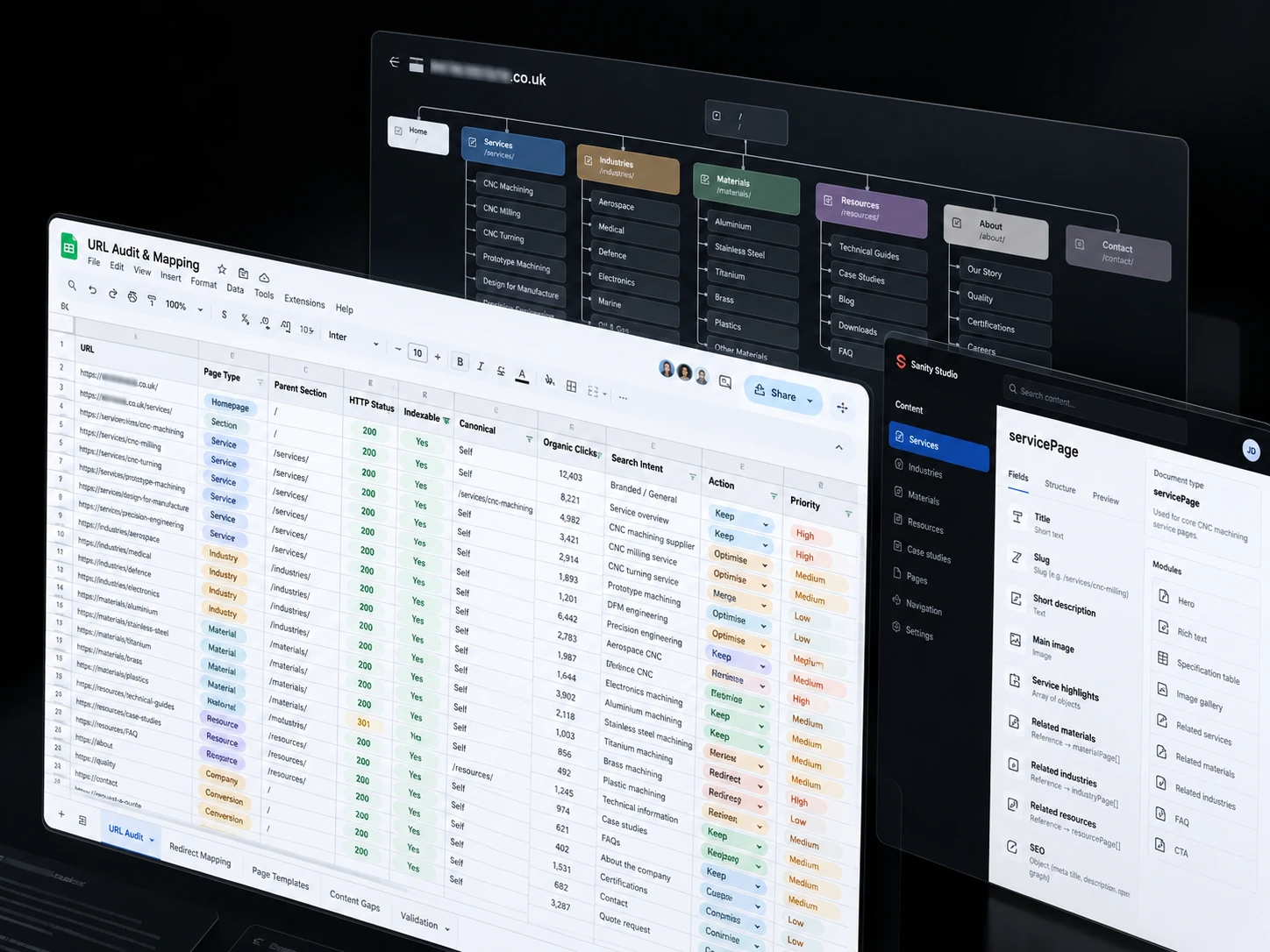
I combined a full crawl of the site with Google Search Console data into one inventory of every URL. That showed what each migration had left behind and which problems touched pages that mattered.
For each broken URL, the question was whether it still had value: links from other sites, past traffic or a clear equivalent on the current site. For each unindexed page, whether it should be improved, merged into another page or deliberately left out.
Then I looked at how the commercial content was organised.
Manufacturing searches are specific. Someone looking for CNC milling services wants a different page from someone researching CNC machining for medical devices. A process page, a materials page and an industry page can mention the same capability but have different jobs.
The important distinction was between fixing individual pages and fixing the decisions that had created the problems in the first place.
Otherwise it would have been easy to rewrite a few titles and leave the same problems in place.
How I Tackled Them
I approached the work in three stages.
Technical problems
First, I fixed what the migrations had broken.
Broken URLs that still had value, through links from other sites, past traffic or a clear equivalent on the current site, were redirected to the closest matching page rather than sent to the homepage. URLs with none of these were left to return a 404, which is the correct answer for a page that no longer exists.
I also updated internal links that still pointed to old addresses, so visitors and Google reached the right page directly instead of through redirects.
Service and product pages
Then, I strengthened the pages that bring in enquiries.
Several of the unindexed pages were service and product pages the business relied on. I rewrote them around what buyers check before they get in touch: the parts the company can make, the materials it works with and the industries it supplies.
Pages that repeated the same generic manufacturing description were either given a distinct focus or merged into a stronger page.
Site architecture
Finally, I gave the site a structure that holds together.
A fourth migration would have put the remaining search value at risk again, so I worked within WordPress instead.
I grouped pages into clear sections for services, processes, materials and industries, decided which page should own each search and linked related pages to each other. The site became easier for Google to crawl and easier for the team to extend as new services were added.
The order was deliberate: repair what was broken, strengthen the pages that win enquiries, then change the structure only where it had a clear purpose.
The Results
The work brought clear gains in organic traffic and, more importantly, in enquiries.
- Customer enquiries
- +197%
- Organic traffic
- 3×
Enquiries are the number that matters here: the site exists to win manufacturing customers, not visits. It also ended up with a structure the team can maintain and extend.
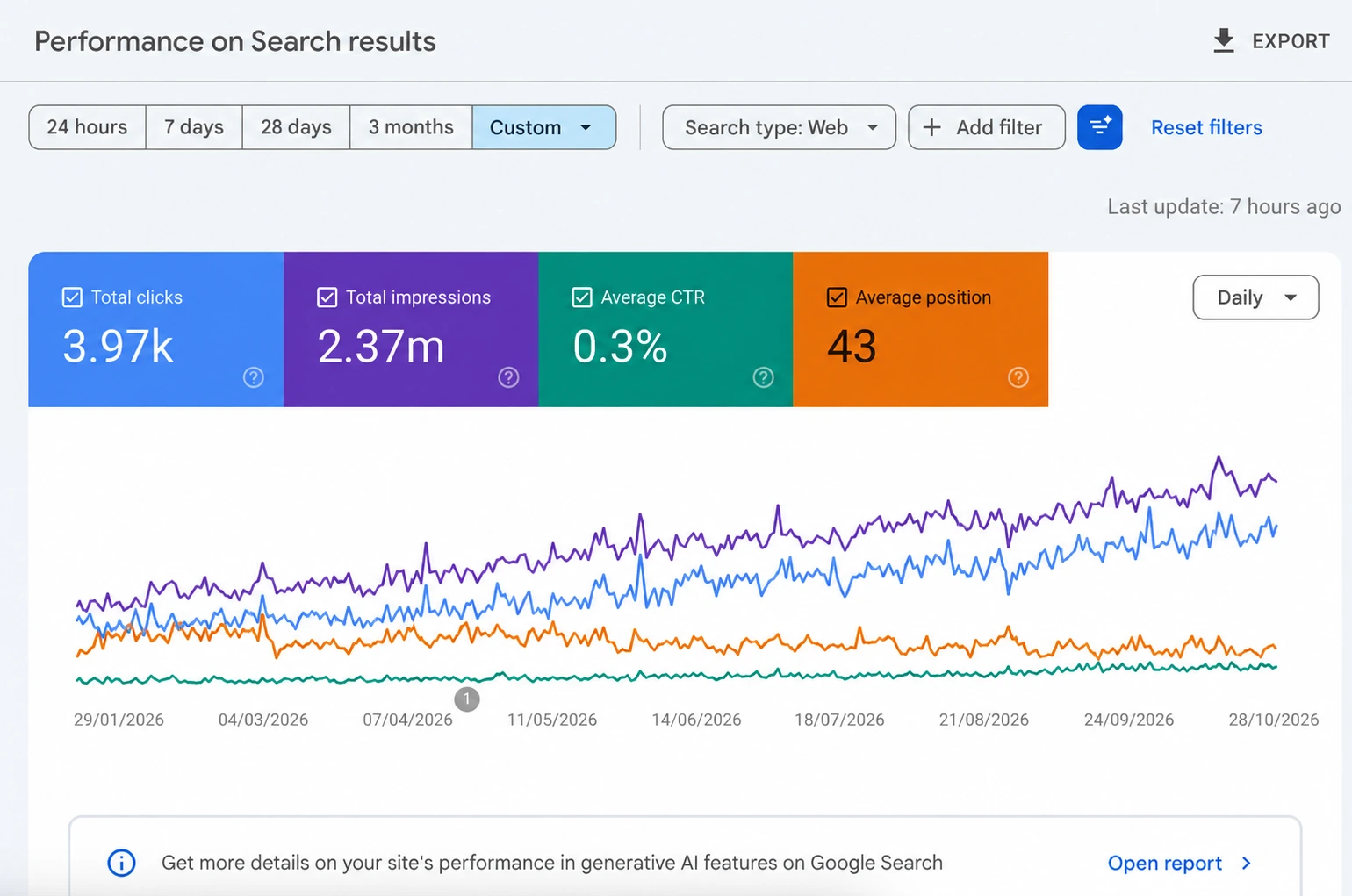
I wouldn't attribute every improvement to one individual change. Technical recovery, better-targeted commercial pages and clearer site structure worked together, and organic search performance is also affected by external factors.
When a website has accumulated years of changes, the answer isn't necessarily to start again. It's to understand what still works, what is getting in the way and what genuinely needs to change.